
Best Trout Fishing Rod and Reel Combos: Rigging and Performance Guide
Engineered rod blank actions, reel spool balancing, and line pairing formulas for precision river presentations.
Rod Action, Power & Line Pairing Matrix
Test reel sizes, line ratings, and rod blanks to calculate balance points, casting reach, and strike drag thresholds.
The ideal trout fishing rod and reel combo is a 6'6" to 7'0" light-power, fast-action spinning rod paired with a 2000-size reel spooled with 4–6 lb monofilament or fluorocarbon. This balance provides sufficient casting distance for lightweight spinners while preserving sensitive strike detection on delicate takes.
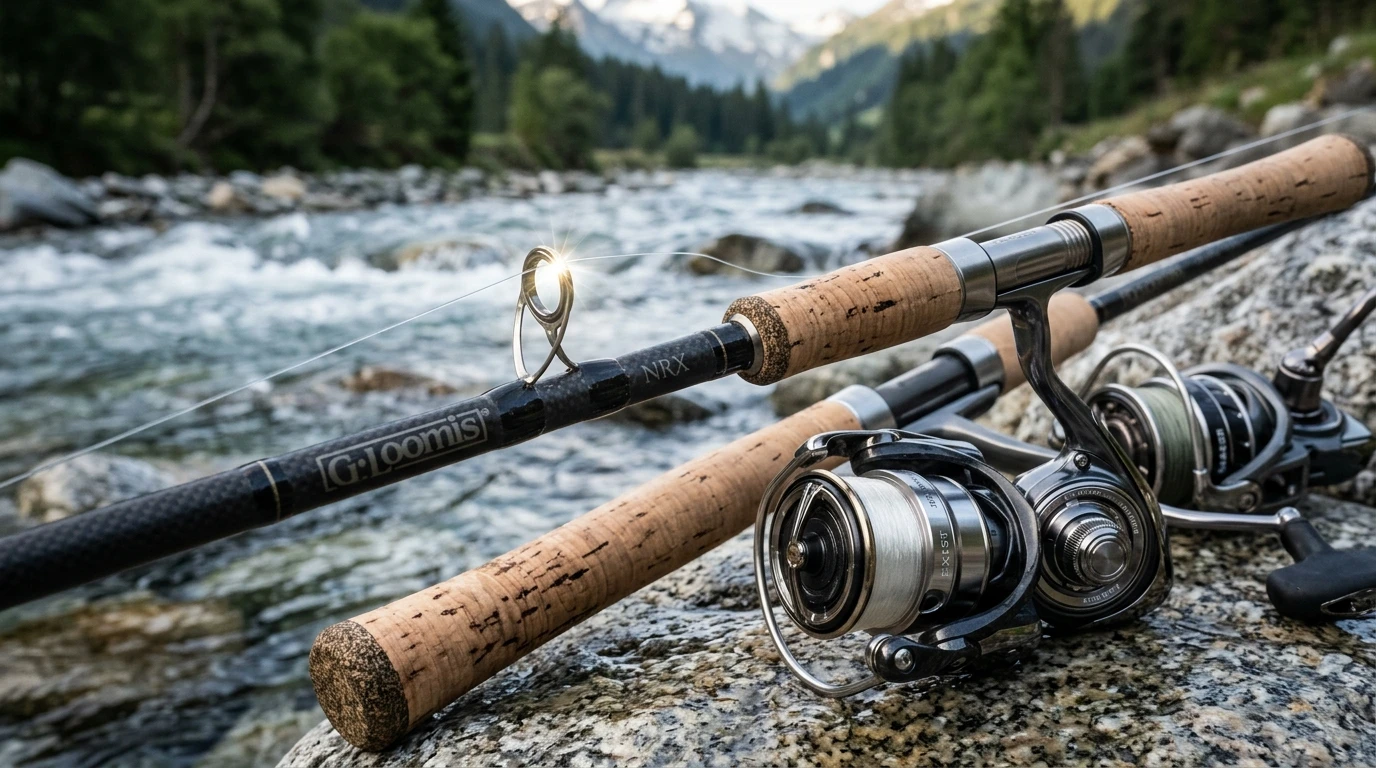
Anatomy of a Balanced Trout Combo
A balanced angling outfit functions as a natural extension of the angler's forearm. When holding a setup at the reel seat with an index finger extended under the blank, a properly balanced combo rests horizontally with minimal forward or backward tilt. A tip-heavy setup strains wrist tendons during a long day of stream wading, while a butt-heavy setup blunts tactile vibration transmission.
Rod Power vs. Rod Action Explained
Many anglers conflate power with action, leading to mismatched tackle purchases:
Reel Size Selection: 1000 vs. 2000 vs. 2500 Series
For spinning outfits targeting river trout, the 2000-size spool represents the sweet spot. While 1000-series reels shave 1 ounce of weight, their compact spool circumferences create tight line coils that reduce casting distance with stiff fluorocarbon. Conversely, 2500 and 3000 reels offer greater line capacity and higher drag surfaces, making them indispensable when matching 9'0" to 11'0" steelhead rods in strong current glides.
Top Tested Trout Rod and Reel Combos
| Application Scenario | Recommended Rod Blank | Recommended Reel | Line Specification |
|---|---|---|---|
| Ultralight Small Stream | 6'0" UL Fast (St. Croix Trout Series) | Shimano Sedona 1000 | 2–4 lb Fluorocarbon |
| All-Round River Drift | 6'9" Light Fast (G. Loomis Trout) | Daiwa Fuego LT 2000 | 6 lb Monofilament Main |
| Great Lakes Steelhead Drift | 9'6" ML Mod-Fast (Okuma SST) | Penn Battle III 2500 | 10 lb Braid + 6 lb Fluoro |
| Long-Range Centerpin Trotting | 11'3" Light Float (Raven Matrix) | Raven Edge 4.5" Centerpin | 10 lb High-Vis Hydro Float |
Best Overall Ultralight Stream Combo
For bushwhacking along overgrown mountain freestones, a 6'0" to 6'6" ultralight rod paired with a 1000-series reel allows short, accurate roll casts beneath low-hanging willow branches. Ultralight carbon blanks load effortlessly under the minimal weight of a 1/16 oz inline spinner or unweighted stonefly nymph.
Best River Drift and Float Combo
When working expansive river glides, line control over swirling cross-currents requires additional blank length. A 7'0" to 7'6" light-power rod allows mending line over eddy seams without pulling the float out of the prime bubble line.
Line Spooling and Balance Calibration
Spooling line correctly dictates whether a setup casts cleanly or suffers from wind knots and birds nests.
Monofilament vs. Braid with Fluorocarbon Leader
Monofilament offers natural stretch (typically 20% to 25% under load), which acts as a shock absorber when energetic river trout surge unexpectedly near the landing net. However, for river fishing at distances greater than 50 feet, braided mainline (8 to 15 lb test) paired with a 6-foot fluorocarbon leader provides zero-stretch sensitivity and effortless mending.
Drag Tension Setting Protocol (25% Rule)
Never set drag tension by hand-pulling line across the guide tip. Use a digital fish scale attached to the terminal swivel, bending the rod into its natural fighting curve. Set drag release at exactly 25% of the leader's wet knot strength (e.g., 1.5 lbs of drag for a 6 lb leader). This prevents break-offs during sudden runs into heavy rapids.
Once your combo is properly balanced, proceed to our complete terminal tackle rig guide to select the correct leader tapers, split shot spacing, and terminal hooks.
Frequently Asked Questions About Combos
01 What is the difference between rod power and rod action?
Rod power describes the blank's lifting strength and resistance to bending (Ultralight, Light, Medium, Heavy), dictating appropriate lure weights and line classes. Rod action refers to where the rod flexes along its length under load; Fast action bends primarily in the top third for quick hooksets and high sensitivity, while Moderate or Slow action flexes deeper into the blank to protect fine tippets from shock.
02 What size spinning reel is ideal for trout fishing?
A 2000-size spinning reel offers the optimum balance for standard 6'6" to 7'0" light rods. It provides a wide enough spool diameter to prevent stiff line memory and line twist while remaining light enough (typically 6.5 to 7.5 ounces) to prevent wrist fatigue during long river wade sessions.
03 How should drag tension be calibrated for salmonid fishing?
Apply the standard IGFA 25% rule: set drag tension using a spring scale so line pulls off the spool at approximately 25% to 30% of the leader's rated breaking strength. For a 4 lb fluorocarbon tippet, drag should yield at 1.0 to 1.2 lbs of sustained pressure.