
Centerpin Reels: Complete River Float Fishing and Buying Guide
Aircraft-grade 1:1 direct-drive reels, zero-drag drift mechanics, and mathematically balanced float shotting patterns.
Centerpin Float Shotting & River Current Balancer
Calculate split shot quantities, sizes, and spacing patterns to achieve neutral buoyancy and zero-drag drifts.
A centerpin reel is a specialized, 1:1 direct-drive reel that rotates freely on precision ball bearings with zero mechanical drag. It allows river current to pull line naturally off the spool, delivering perfectly drag-free float presentations essential for pressured steelhead and river trout in moving currents.
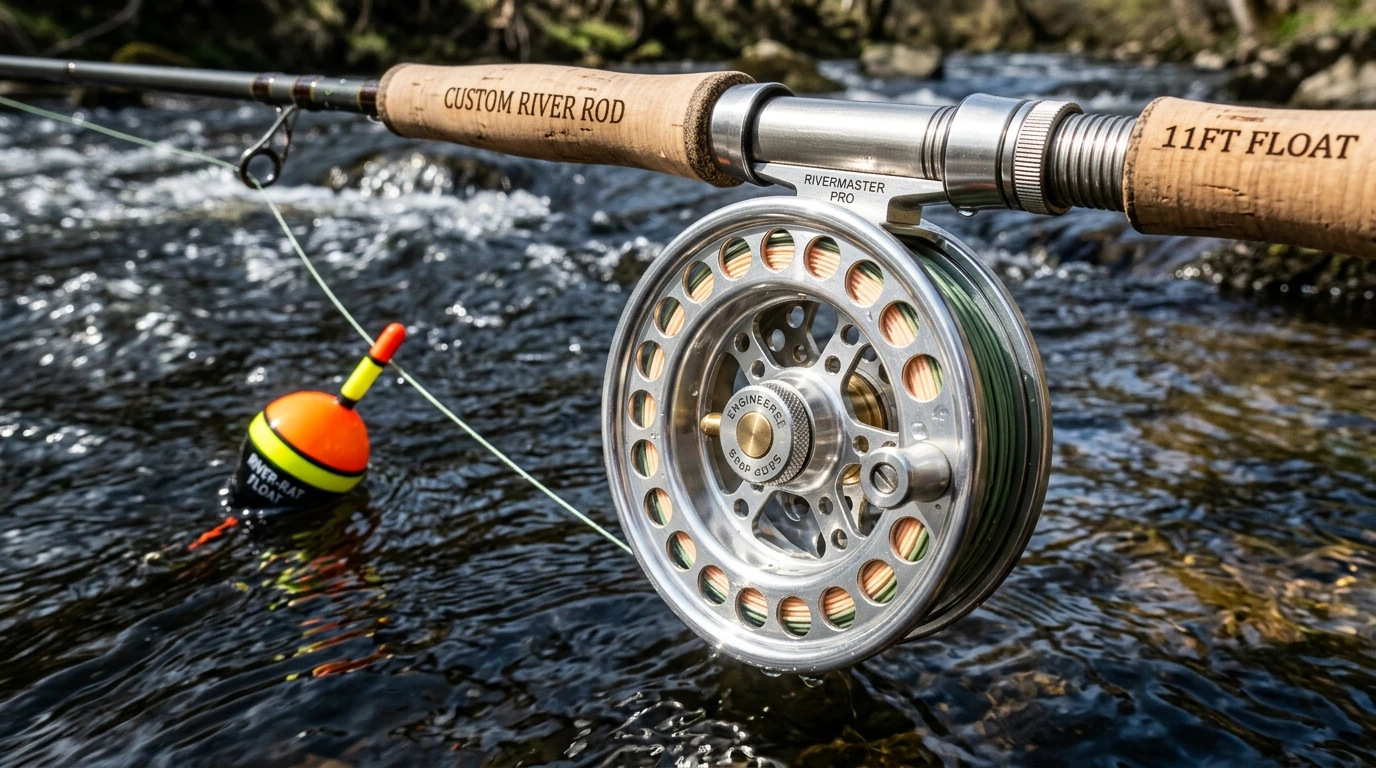
How Centerpin Reels Operate
To the uninitiated, a centerpin reel looks like an oversized fly reel. However, its mechanical design and operational function are fundamentally distinct. While a fly reel stores line and employs an internal disc drag to fight fish, a centerpin is an active casting and drift engine.
1:1 Direct Drive Mechanics and The True Zero-Drag Drift
Every turn of the spool equates to one revolution of line retrieval—there are no gears, no level-winds, and no mechanical slip clutches. The spool sits perpendicular to the rod blank, allowing line to feed straight off the outer rim directly in line with the river current.
When conventional spinning or baitcasting reels are used for float fishing, the line is pinned beneath a bail wire or thumb bar. As the float travels downriver, friction from the spool lip causes the float to pause and tip backward, creating unnatural drag. Pressured steelhead immediately identify this surface tension and reject the bait. A freely rotating centerpin eliminates this friction completely: the gentle pull of water against the float's balsa body is sufficient to keep the spool revolving in exact cadence with river flow.
ABEC 5 vs. ABEC 7 vs. Ceramic Bearing Tolerances
The performance of a modern bearing pin is determined by the annular bearing engineering committee (ABEC) tolerance scale:
Top Rated Centerpin Reels for River Anglers
| Model | Spool Diameter | Bearing Type | Palming Rim Style | Best Application |
|---|---|---|---|---|
| Okuma Sheffield 1002 | 4.50 inches | Dual ABEC 5 Stainless | Smooth Machined Bevel | Best Value Entry Float Reel |
| Raven Matrix Fully Ported | 4.375 inches | Precision Shielded HP | Serrated Ergonomic Lip | All-Round Great Lakes Rivers |
| Kingpin Zeppelin Royale | 4.75 inches | German ABEC 7 Tooling | Wide Contoured Flange | Tournament Steelhead Trotting |
| Islander Steelheader | 4.50 inches | Dual Stainless Shielded | Classic Traditional Rim | Pacific Northwest Heavy Flows |
Best Entry-Level Bushing vs. Bearing Reels
Anglers entering river trotting often debate traditional bronze bushings versus ball bearings. Bushing reels offer an authentic traditional feel, but require daily mineral oil maintenance and slightly heavier current to begin spinning. For 90% of modern anglers targeting cold winter tributaries, sealed ball bearing reels deliver superior out-of-the-box performance without frequent teardowns on freezing riverbanks.
Centerpin Float Balancing and Shotting Patterns
A centerpin float is only as effective as the split shot configuration below it. Match your spool with calibrated river float shotting patterns to control bait depth and trajectory.
Shirt-Button Shotting for Uniform Currents
In uniform glides where surface and sub-surface water speeds are closely aligned, the Shirt-Button pattern is unrivaled. Split shot sizes taper progressively from AAA weights under the float down to tiny No. 6 micro-droppers near the swivel. This creates a gentle downward parabolic curve that presents your bait naturally ahead of the tackle.
Bulk and Micro-Dropper Shotting for Fast Water Pools
When fishing deep plunge pools, heavy boils, or fast riffles, a Shirt-Button pattern causes the bait to hydroplane upward above holding fish. Bulk shotting clusters 80% of total lead weight 18 to 24 inches above the bait, piercing the turbulent surface shear layer and pinning the hook into the calm boundary layer near river bottom.
Essential Centerpin Techniques
Wallis Cast and Side Cast Execution
The Wallis Cast requires grasping the line between the butt guide and reel while holding the rod tip at a 45-degree angle. As the rod swings forward, a smooth pull with the free hand starts the spool spinning, launching the float with zero line slap. Mastering this cast eliminates reliance on clumsy overhead spinning motions.
Palm Drag Control When Fighting Trophy Steelhead
Because a centerpin lacks a mechanical drag clicker to brake fish runs, the angler’s palm serves as a disc brake. Cupping the ventilated spool flange allows feathering resistance from zero to twenty pounds within milliseconds, preventing line breakage when a hot steelhead charges through river chutes.
Centerpin Float Fishing Frequently Asked Questions
01 Do centerpin reels have a mechanical drag system?
No. True centerpin reels feature zero mechanical drag. The reel free-spools completely on high-precision bearings. When fighting a fish, the angler uses their palm, thumb, or fingers against the spool rim (termed palming) to apply precise, variable friction directly to the fish's surges.
02 What is the difference between bushing and bearing centerpin reels?
Traditional bushing reels (true pins) utilize a bronze or phosphor bushing resting on a polished steel spindle, requiring light oil lubricants. They offer smooth, controlled startup inertia ideal for fast river flows. Modern bearing centerpins use dual ABEC 5, 7, or ceramic ball bearings that require virtually zero pull force to spin, allowing effortless trotting even in slow river glides.
03 How do you cast a centerpin reel without a spinning spool?
Centerpin casting relies on two primary techniques: the Wallis Cast and the Side Cast. The Side Cast involves pulling a loop of line from between the rod guides and swinging the float out like a pendulum. The Wallis Cast uses a coordinated two-handed pull that accelerates the spool's rotation, launching floats smoothly up to 60–80 feet without tangling.